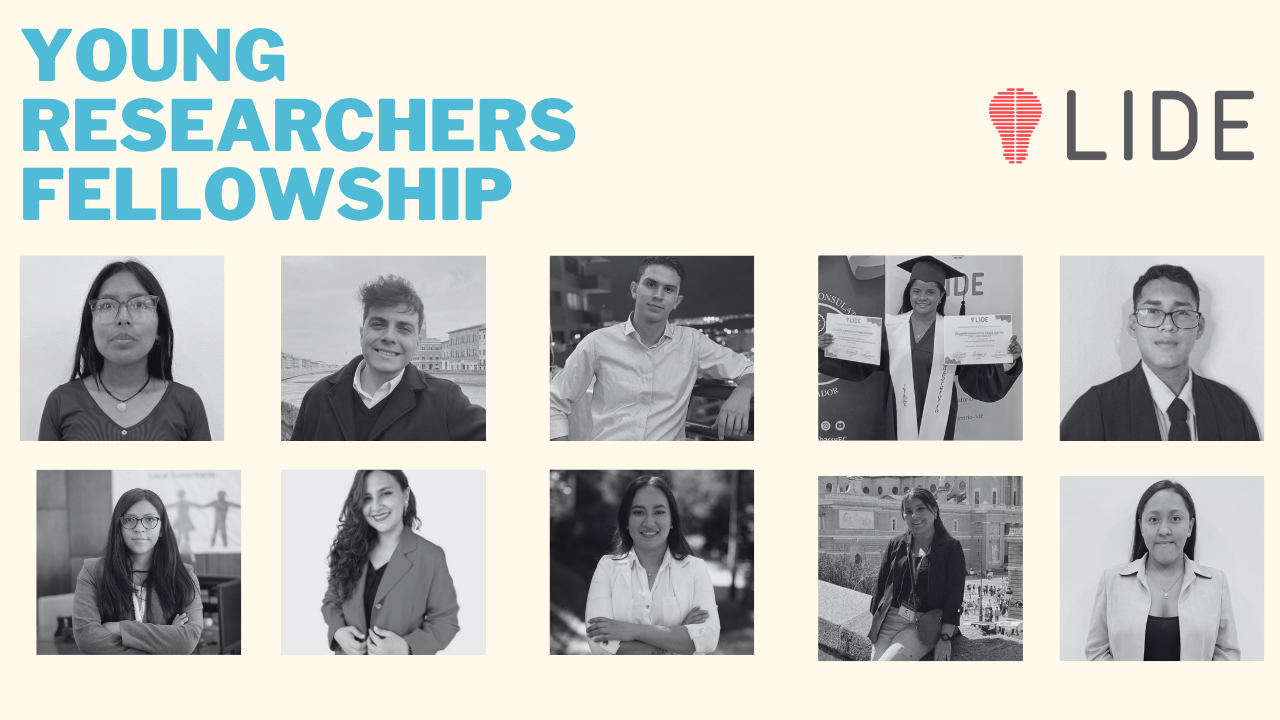
Young Researchers Fellowship concludes successfully: strengthening Ecuador’s next generation of social scientists
- Posted by Daniel Sanchez Pazmiño
- -
- 24-03-2026
- -
- Categories: News, Young Researchers Fellowship
In Ecuador, access to an academic career is shaped by social background, family environment, and access to quality university education. Changing that reality requires creating concrete pathways for young people with potential who lack the networks and resources that have traditionally opened those doors.
With that goal in mind, the Young Researchers Fellowship was born — an initiative of the Ecuadorian Development Research Lab (LIDE) aimed at training the next generation of social scientists in the country. The program offers comprehensive training in quantitative research, public policy analysis, academic English, and project development, along with personalized mentorship and access to academic networks. It was designed for students and recent graduates of Ecuadorian universities, with special priority given to low-income youth and those from communities underrepresented in academia. In its first edition, it brought together fellows from across the country in a remote, eight-month format.
The program was also supported by DataCamp and the Centro Ecuatoriano Norteamericano (CEN), strategic partners who contributed to strengthening participants' technical, linguistic, and analytical skills.
The successful conclusion of this first edition marks an important step toward building a more open, more diverse, and more socially engaged academic community in Ecuador. Through the Young Researchers Fellowship, LIDE not only strengthens technical skills but also works to democratize access to knowledge production and international graduate study opportunities.
Between July 2024 and July 2025, participants received intensive training in quantitative skills applied to social science research. Throughout the program, fellows were trained in research methodologies, statistics, and data analysis in R and Stata, as well as academic writing and comprehensive preparation for applying to graduate programs abroad. Participants also developed skills in building academic CVs, writing statements of purpose, and strategically identifying graduate programs.
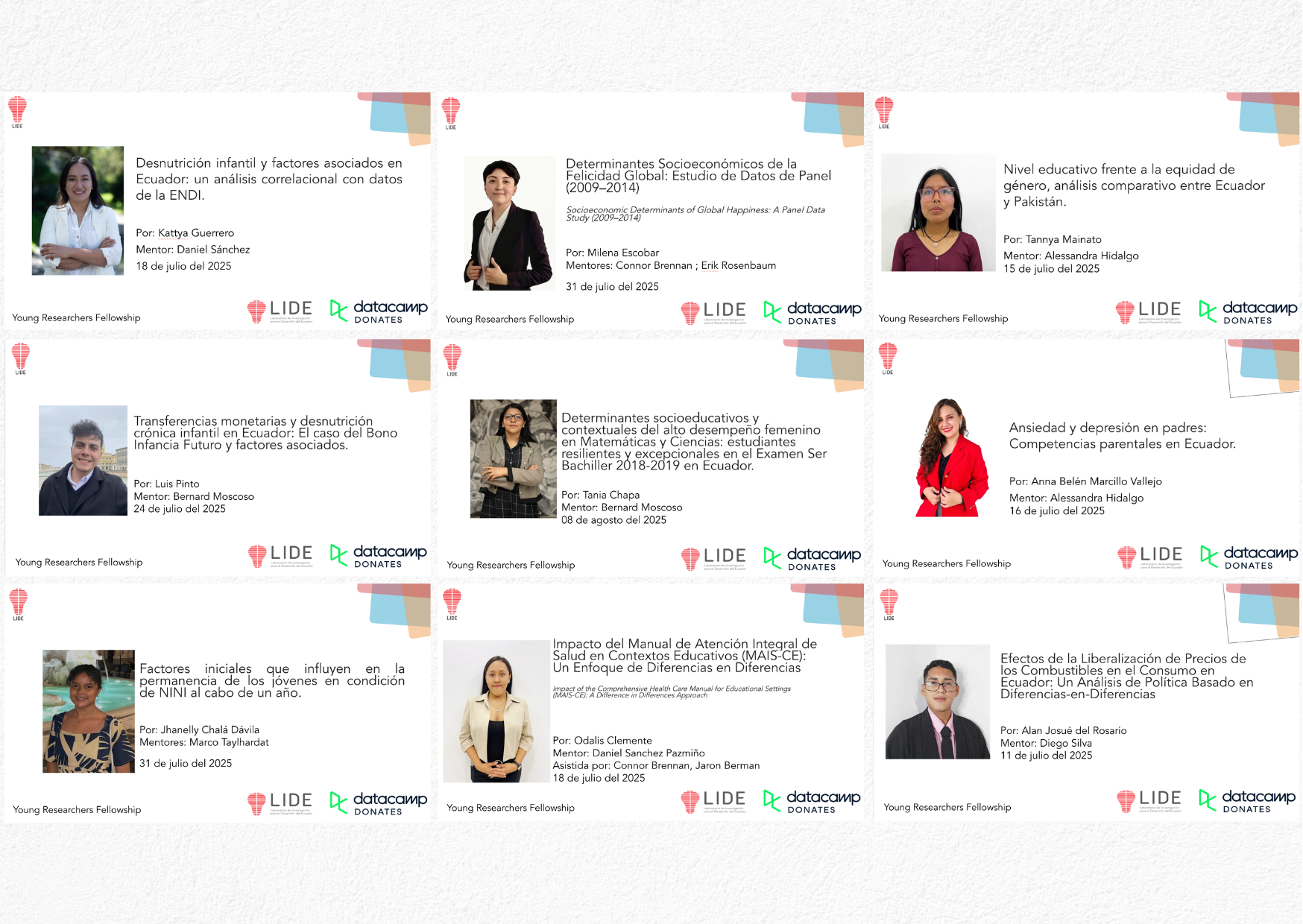
Alongside the academic component, a mentorship and tutoring matching process was implemented, providing each participant with guidance tailored to their discipline and research interests. This accompaniment ran in parallel with coursework and allowed participants, as they progressed through the program, to work on their own research papers — progressively integrating the technical knowledge acquired with a practical, research-oriented application.
The mentorship process included support from national and international researchers and academics, who worked alongside fellows across various disciplinary areas. We are especially grateful to those who led and coordinated this mentorship process.
Young Researchers Fellowship encouraged student participation in international graduate scholarships
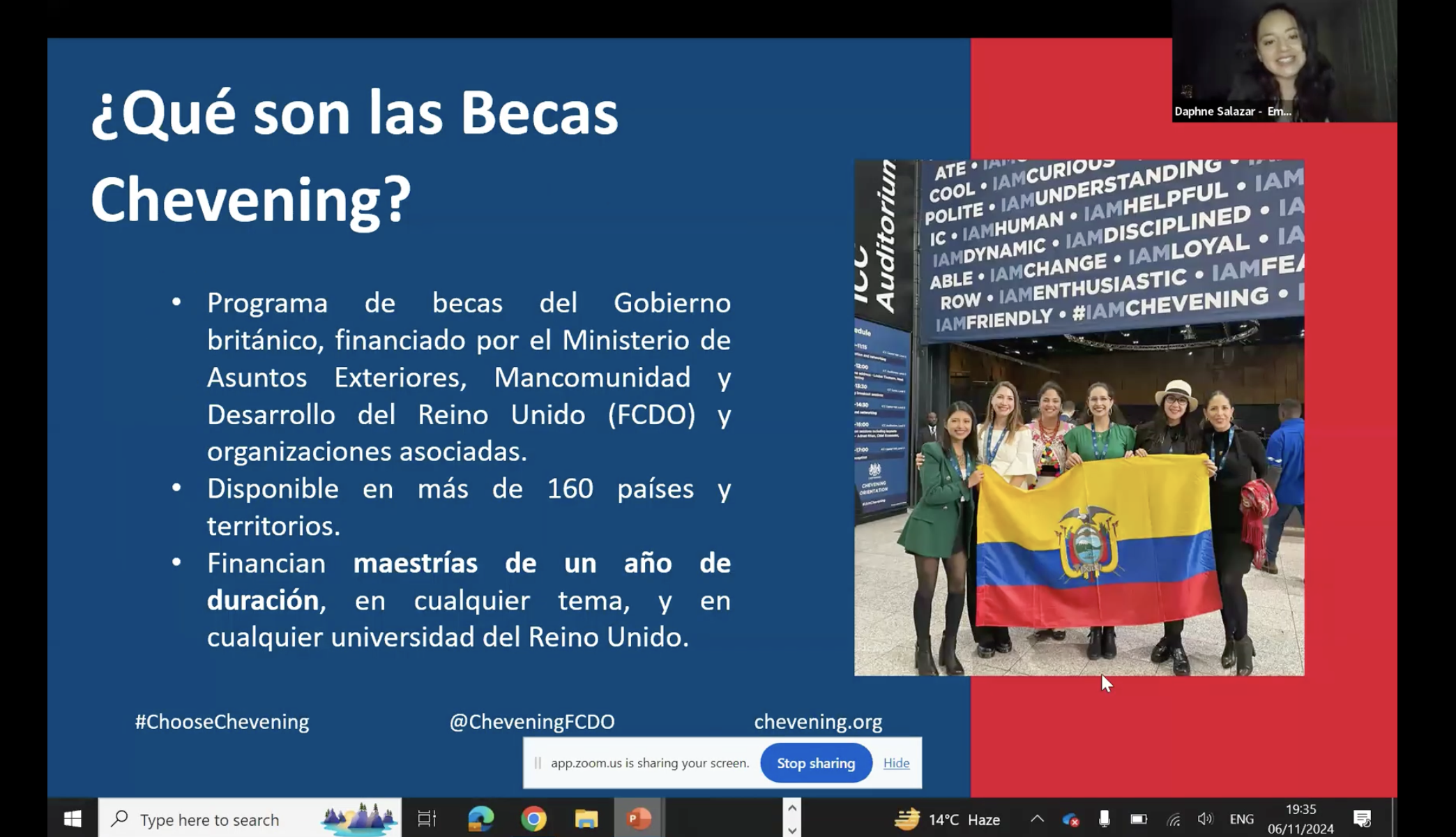
The program brought together in a single space opportunities that rarely converge, through informational sessions on scholarships such as Chevening (United Kingdom), Fulbright (United States), Globo Común (SENESCYT), Opportunity Funds, and Taiwan’s scholarship programs (Taiwan Scholarship, Huayu Enrichment Scholarship), giving participants concrete tools to plan their academic trajectories and access international funding.
The program also operated in a bilingual (Spanish–English) environment and included access to Magoosh, a platform specializing in preparation for international exams such as the TOEFL. Additionally, LIDE established a partnership with the University of Minnesota, through which volunteer students from the American university taught group classes focused on strengthening academic English and, in particular, developing oral communication skills.
- Alan Josue Del Rosario Ochoa (Universidad Estatal de Milagro)
- Alan Mateo Morales Gualotuña (Pontificia Universidad Católica del Ecuador)
- Anna Belén Marcillo Vallejo (Universidad De Las Américas)
- Jean Carlos Muñoz (Universidad Estatal del Sur de Manabí)
- Jhanelly Samantha Chalá Dávila (Universidad Estatal de Milagro)
- Karen Ortega Renteria (Universidad Nacional de Educación)
- Kattya Guerrero Jiménez (Universidad de Cuenca)
- Luis Hernán Pinto Alemán (Universidad de Pisa)
- Marjorie Verenisse Ortiz López (Universidad Nacional de Educación)
- Milena Raquel Escobar Erazo (Pontificia Universidad Católica del Ecuador)
- Odalis Narcisa Clemente Pincay (Universidad Estatal de Milagro)
- Tannya María Mainato Quizhpilema (Universidad Nacional de Educación)
- Tania Estefanía Chapa Barreto (Universidad de Cuenca)
- Vicky Patricia Mina Tigasi (Yachay Tech)
In this way, LIDE reaffirms its commitment to reducing the socioeconomic barriers that persist in disadvantaged communities, promoting equal access to high-quality education.
Programs like the Young Researchers Fellowship could not exist without the generosity of our donors. If you believe in what we do, please consider supporting LIDE.